Contact Us
Changsha Hone Arts Co.,Ltd
TEL: +86-731-84886102
WhatApp:13975166561
E-mail: marketing5@hnarts.com
Address :RM 8033 FL 8 Tower B Wan Fu Hui Mansion 9 Shuang Yong RD PC 410003 Changsha China


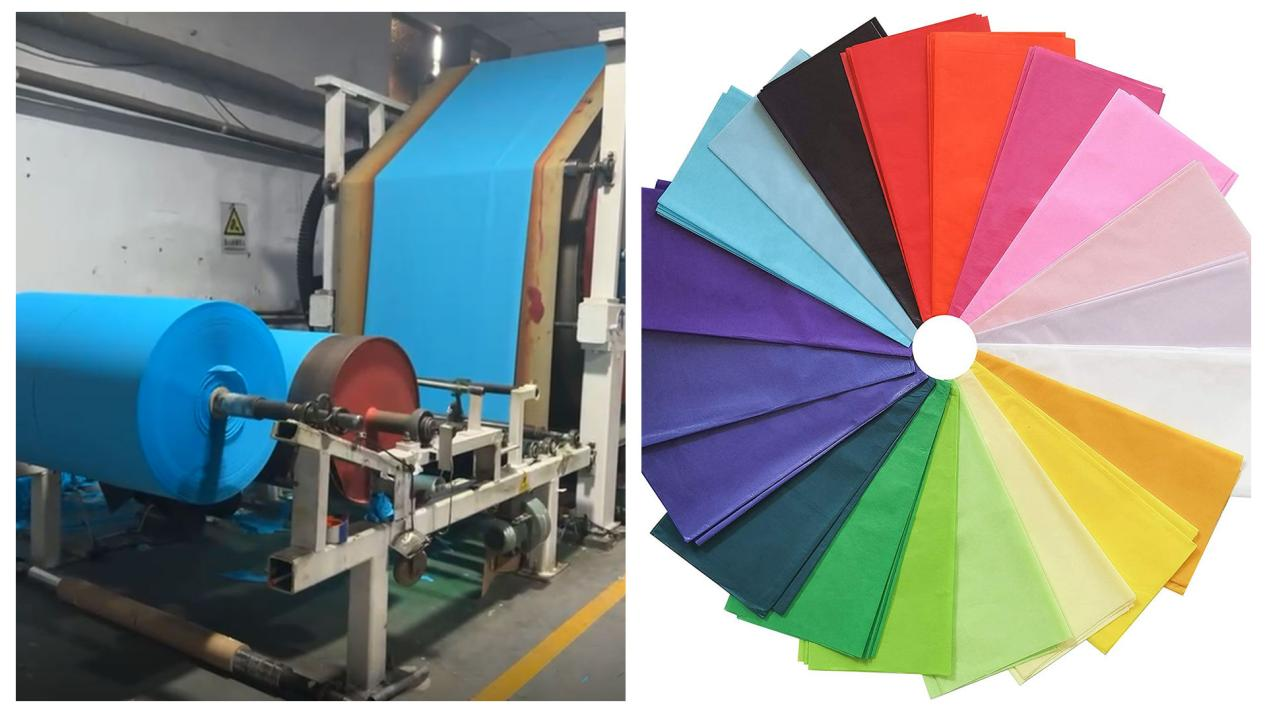
Tissue paper is a lightweight, soft, and highly absorbent paper product widely used in hygiene products, wiping papers, kitchen towels, and various other applications. Its manufacturing process combines papermaking engineering and materials science, transforming plant fibers into the everyday tissue products we rely on.
1. Fiber Preparation
The production of tissue paper begins with the selection and preparation of fiber raw materials. The pulp used can be derived from virgin fibers or secondary (recycled) fibers, typically utilizing chemical pulp, mechanical pulp, or a blend of both. Commonly used fiber sources include softwood pulp and hardwood pulp, each contributing different strength and softness characteristics to the final product.During the preparation stage, the fibers undergo a refining process to adjust their length, fibrillation, and surface properties, laying the foundation for the subsequent sheet formation stage.
2. Sheet Formation
The refined fiber suspension (stock) is evenly distributed onto a moving forming wire through a headbox. During this stage, the fibers gradually deposit on the wire surface to form a wet paper web, while the majority of water is removed by gravity or vacuum-assisted dewatering.
At this point, the web typically achieves a dryness level of only **0.5% to 0.8%**, still containing a significant amount of water.
3. Pressing & Dewatering
The wet web then enters the press section, where further water removal is achieved through mechanical pressing. In multi-roll press systems, the web passes through nips formed by soft and structured materials, increasing the dryness to a pproximately **20% to 50%**. This step not only raises the web's solids content but also prepares it for the subsequent drying stage.
4. Drying & Creping
Drying is one of the most critical stages in tissue paper production. The web is transferred to the surface of a large heated drying cylinder – known as a **Yankee dryer** – for rapid drying. The Yankee dryer has a large diameter and is internally heated with steam.
During the drying process, a mixture of adhesives and release agents is sprayed onto the Yankee dryer surface to ensure proper adhesion of the web to the cylinder while facilitating subsequent creping. The final dryness of the web reaches approximately **95% to 98%**.
Once drying is complete, the web is removed from the dryer surface by a **creping blade**. This mechanical action creates fine micro-creped folds in the paper, imparting the characteristic softness, bulk, and elasticity that distinguish tissue paper from ordinary paper.
For certain premium products, **Through Air Drying (TAD)** technology may be used instead of conventional Yankee drying to produce a more voluminous, highly absorbent sheet.
5. Converting & Finishing
After drying and creping, the base tissue paper undergoes a series of converting processes depending on the final application:
- **Doubling** – Two or more plies are laminated together to form multi-ply tissue products, such as two-ply toilet paper or kitchen towels.
- **Embossing** – The web is pressed through embossing rolls to increase bulk and softness, and also to assist in bonding multiple plies together.
- **Additive Application** – Functional additives such as emollients, wet strength agents, and lotions may be applied to the web to enhance product performance. Emulsion coating weights typically range from **0.1 to 20 grams per square meter**, depending on product specifications.
- **Cutting & Packaging** – The finished web is slit, cut, folded, and packaged into final consumer forms, including rolls, facial tissue boxes, and kitchen towel rolls.
6. Product Characteristics
Tissue paper products typically have a basis weight ranging from **8 to 40 grams per square meter** for single-ply, with total basis weights of multi-ply products generally falling within **10 to 80 grams per square meter**.
The final product performance – including softness, strength, absorbency, and bulk – is governed by the combination of fiber selection, creping parameters, and finishing techniques.
Our Commitment to Quality
Through this precise and highly efficient manufacturing process, tissue paper is transformed into an everyday essential product that combines practicality with user comfort. Our tissue paper products strictly adhere to the above process standards, ensuring consistent quality in every batch and meeting the demands of customers worldwide.




.jpg)

.jpg)
.jpg)
.jpg)